
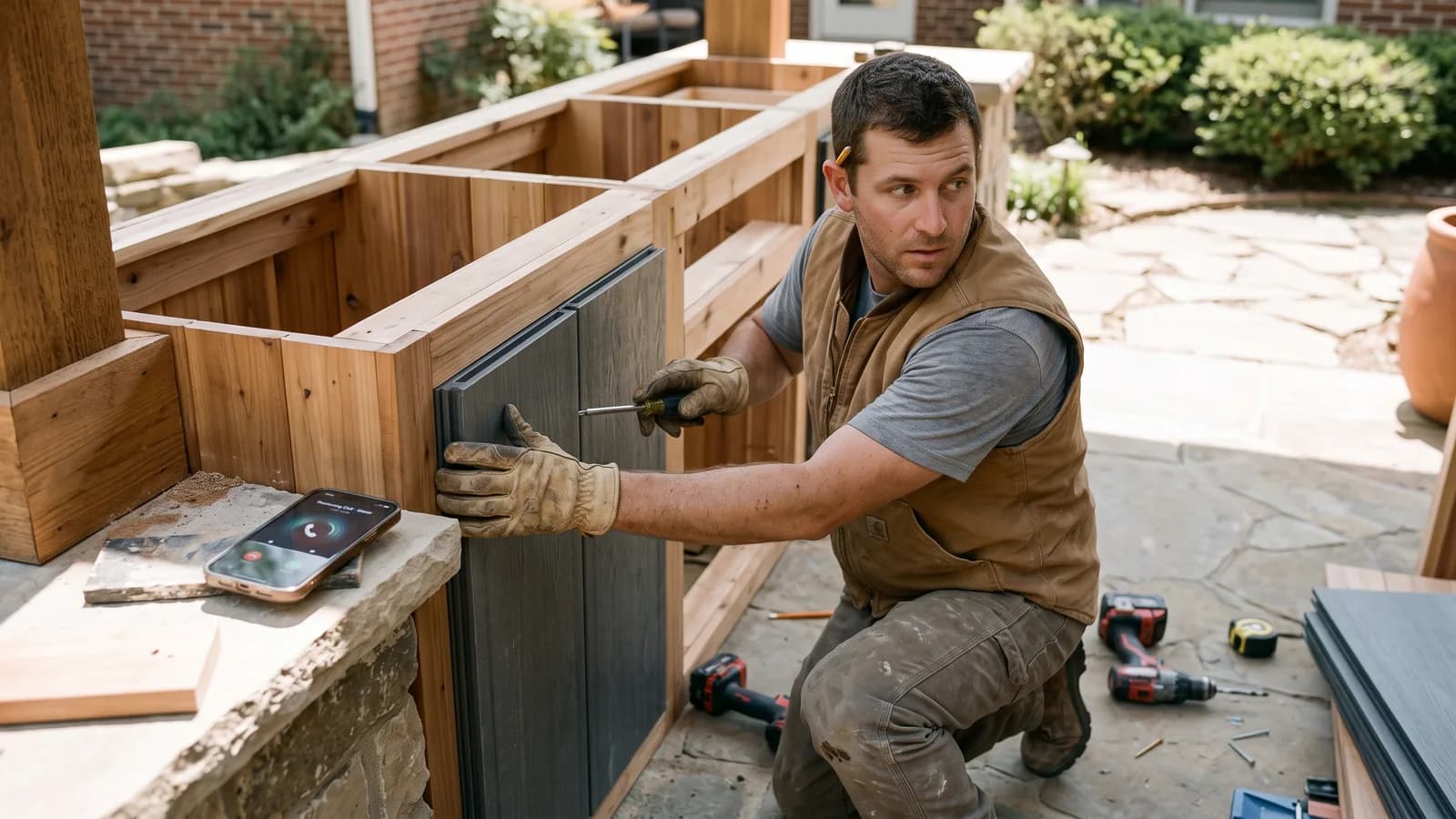
A crew mid-installation cannot also answer an inbound call, and neither can a designer sitting across a table from a homeowner during a consultation. Both are the exact moments an outdoor kitchen business most needs the phone answered, because a homeowner comparing several builders in the same sitting rarely calls back a number that went to voicemail. Closing that gap is less about staffing more people and more about deciding what kind of coverage actually fits how this trade's calls come in.
Why phone coverage gaps hit this trade at the worst moments
The people who would normally pick up the phone, an owner, a lead designer, a project manager, are also the people running site visits, sitting in design consultations, and managing crews on active builds. Unlike a business with dedicated front-desk staff, an outdoor kitchen company's busiest hours for actual work overlap almost exactly with its busiest hours for inbound calls, good weather that gets crews on site is the same good weather that gets homeowners thinking about their backyard. The gap is structural, not a staffing failure, and it shows up hardest during the spring and summer build season when everyone who could answer is already occupied.
The design consultation itself compounds the problem. A one-hour in-home meeting is not the kind of appointment a designer can interrupt to take a call, and stepping away mid-conversation to answer the phone signals distraction to the very homeowner sitting across the table. So the phone rings through, the caller hangs up or leaves a message, and by the time anyone is free to listen to it, that homeowner may have already booked a consultation with a different builder who answered on the first ring. The math is simple but easy to lose sight of in the middle of a busy build season: a call that never gets answered rarely becomes a project at all, regardless of how good the crew's finished work looks in the portfolio.
Measuring missed-call cost before choosing a solution
Before deciding between an automated system and additional staff, it helps to know how many calls are actually going unanswered and what happens to them. Pulling call logs for a typical week and tagging each missed call by time of day and whether it converted into a voicemail, a callback, or nothing at all gives a real baseline. A builder that discovers most missed calls happen between nine and eleven in the morning, exactly when crews are on site and designers are in consultations, has a clearer problem to solve than one guessing at the pattern.
That baseline also reveals seasonal swings a single snapshot would miss. Call volume during a spring push, when both inquiries and active builds peak at the same time, looks very different from a quiet stretch in late fall. Measuring across a full season rather than a single busy week keeps the coverage decision from being built around whichever month happened to be sampled.
What an artificial intelligence receptionist handles well for outdoor kitchen calls
An artificial intelligence receptionist that answers every call immediately, gathers the basics, name, property location, general project scope, and offers a real consultation time, handles the bulk of first-contact inquiries well and never has to choose between the phone and a job site. It is available at the same hours homeowners are actually browsing and calling, including evenings and weekends when a live team is smallest. For straightforward inquiries, the speed of that first response matters more to the outcome than whether a human or a system picked up.
Where a human receptionist still has the edge
Some calls need a person: an existing client asking about a change during an active build, a warranty question that requires reading the specifics of a past project, or a homeowner working through a complicated site with unusual access constraints. These calls benefit from someone who can reference project history and make a judgment call rather than follow a script. A pipeline system that actually tracks which stage each project is in makes it possible to route these calls to whoever is closest to that project rather than treating every inbound call the same way.
There is also a trust dimension that matters most with an existing client. A homeowner mid-project who is already a little anxious about a delayed appliance delivery or a permit holdup wants to hear from someone who already knows their project, not to re-explain the whole situation to a system on the phone. Reserving human coverage for these relationship-carrying calls protects the trust built during the sales process from eroding during construction.
Route by call type, not by whoever happens to answer
A blended coverage model that fits crew and design schedules
The most reliable setup for this trade blends both: an automated system catches every inbound call immediately and handles new inquiries end to end, while flagging anything that sounds like an existing client or a complicated situation for a callback from a real team member within the hour. That blend keeps first-contact response fast without asking crews or designers to interrupt actual work, and it scales naturally with how much lead volume the crew can actually build in a season, rather than requiring new hires every time call volume grows.
Ready to talk numbers on your own pipeline?
On the strategy call, we'll lay out the plan we'd run for your business and talk through how it fits your market.
Final thought
The people best positioned to answer an outdoor kitchen inquiry are also the people who are structurally least available to take the call. Solving that with a blended coverage model, an automated system for immediate, straightforward response and a human for anything that needs judgment or history, keeps the phone answered without pulling a designer out of a consultation or a crew off a job site.
Tagged