
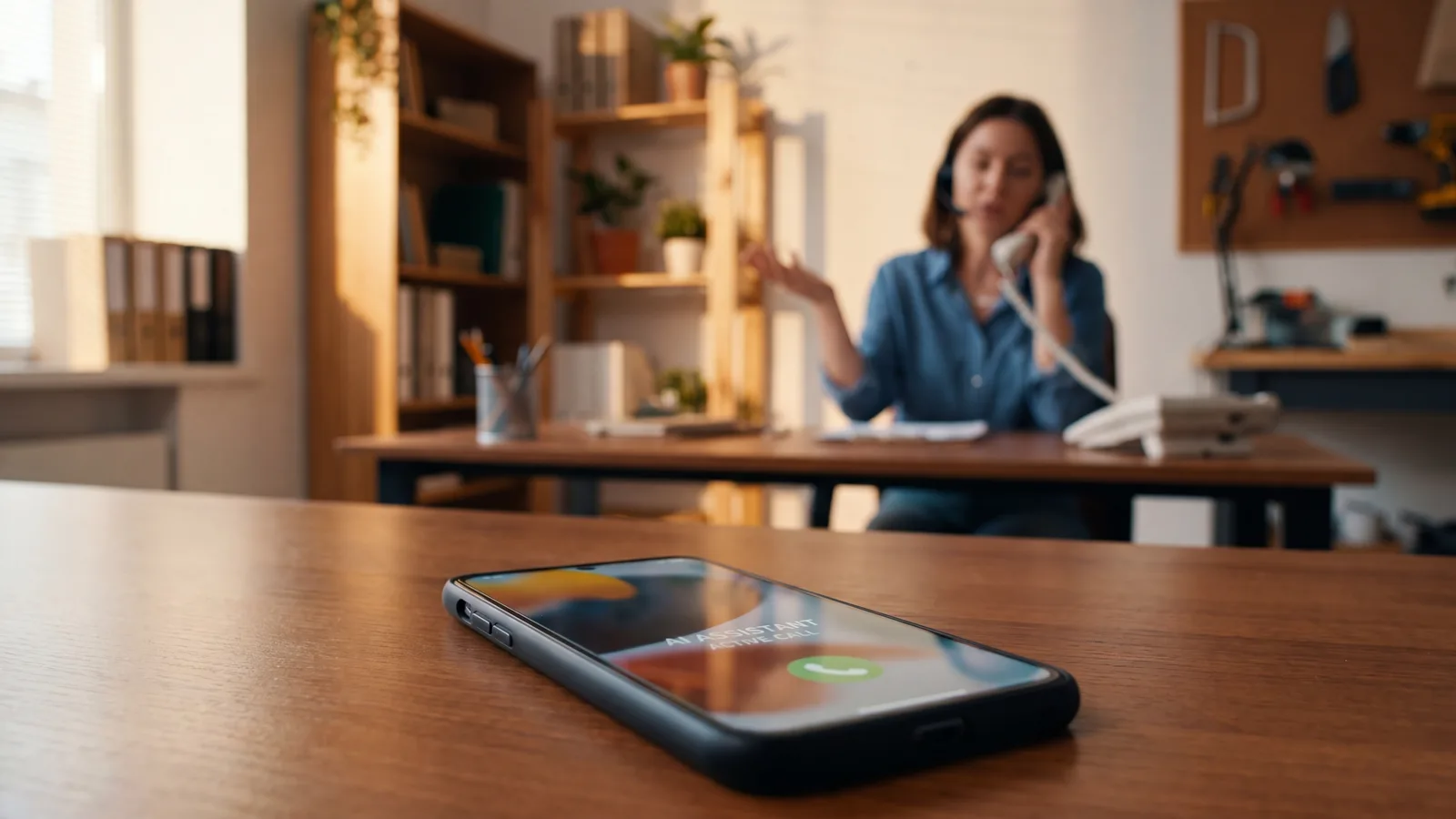
The pitch for AI receptionists in residential contractor marketing has gotten loud in 2026, and not without reason, the technology has gotten dramatically better, the cost is a fraction of human staffing, and the 24/7 coverage solves a real operational problem most window contractors have. The reality is more nuanced. AI receptionists handle some scenarios brilliantly and other scenarios badly. Here's the practical breakdown for residential window & door replacement contractors.
What AI receptionists genuinely do well
1. After-hours coverage
The single biggest win. A homeowner calling at 9pm Saturday needs to reach a competent voice. AI receptionists answer 100% of after-hours calls instantly, capture intent, schedule callback or appointment, and trigger SMS confirmations. The alternative, voicemail or unanswered ringing, is brutal for lead-response speed. Speed-to-lead math here.
2. Routine intake
For 70-80% of inbound contractor calls, “I'd like to schedule a quote,” “What service area do you cover?”, “What kinds of windows do you install?”, modern AI receptionists handle the conversation cleanly. The buyer typically doesn't even notice they're speaking to AI.
3. Volume spikes
When a Meta ad goes viral or a TV spot lands, call volume can 10x within hours. Human receptionist staffing can't scale that fast. AI handles 50 simultaneous calls without degradation.
4. Compliance discipline
AI receptionists follow scripts perfectly, no compliance-violating off-script remarks, no inappropriate promises, no SDR-improvising into TCPA-grey territory. The consistency is itself a risk-reduction feature.
The math behind the cost case
What AI receptionists fall short on
1. Nuanced objection handling
A homeowner calling with concerns about a competing quote, unusual project complexity, or skepticism rooted in past bad-contractor experience needs human pattern matching. AI will follow its trained playbook, miss the underlying concern, and produce an interaction that the buyer experiences as “the company didn't really hear me.”
2. Relationship signals
High-ticket buyers, specifically, the demographic buying $20K+ window jobs, read warmth and rapport as buying criteria. AI is better at this than it was two years ago but still trails experienced human receptionists. For brand positioning emphasizing relationship + craft, the all-AI front-line is a brand mismatch.
3. Escalation judgment
AI can be programmed to escalate to a human under specific conditions, but the judgment of when to escalate is still rough. Edge cases, a lead who keeps repeating themselves, a call where the buyer asks unusual questions, a sensitive conversation about a deceased homeowner's estate, often need a human in the loop earlier than the algorithm decides.
4. Reading frustrated callers
A frustrated existing customer calling with an install complaint experiences AI handling as a barrier rather than a service. These calls need human empathy on call one.
The hybrid setup that consistently wins
For most residential window contractors, the right answer is layered:
Layer 1: AI as 24/7 first-touch
Every inbound call routes to AI first. AI answers, identifies purpose (new lead, existing customer, vendor, other), captures basic intake.
Layer 2: AI handles routine end-to-end
For straightforward new-lead intake during business hours, AI books the consultation, fires the SMS confirmation, creates the CRM record. Human is unnecessary.
Layer 3: Smart escalation rules
AI escalates to human when:
- Caller asks for a specific person by name.
- Existing customer mentions a problem or complaint.
- Lead asks 3+ questions outside the script's confidence range.
- Sentiment-detection flags frustration or confusion.
- Call duration exceeds 6 minutes without a clear next step.
Layer 4: Human-only after-hours emergency line
Existing customer with an active install issue or recent post-install problem hits a human directly, 24/7. Doesn't go through AI. Customer-experience-protection move.
Implementation cost reality
AI receptionist implementations are not plug-and-play. The cost components:
- Platform subscription: $400-$1500/mo depending on call volume + features.
- Setup + training: $2K-$10K one-time, plus ongoing prompt iteration.
- Phone-system integration: $500-$3K depending on existing telephony stack.
- CRM integration: $1K-$5K to wire AI intake into proper lead-capture workflows.
- Compliance review: $1K-$3K legal review of scripts and recorded-call policies.
- Ongoing optimization:4-8 hours/month of someone refining the AI's prompts based on call recordings.
The compliance trap
The metric to actually track
Don't evaluate AI receptionist performance by cost-per-call (cheap) or volume-handled (high). Track:
- Conversion rate by call type, AI-handled new-lead calls vs human-handled new-lead calls converting to consultations at what rate.
- Customer satisfaction scores by intake type , survey 90 days post-call, compare AI-only vs human- touched.
- Escalation rate, what percentage of AI calls escalate to human, and what percentage of escalations should have happened earlier.
- Edge-case failure rate, calls where AI handled it but the customer subsequently complained or re-called for clarification.
65-80%
Typical share of inbound contractor calls that AI receptionists can handle end-to-end (no human escalation needed) at acceptable customer-experience quality. The remaining 20-35% genuinely need human handling.
Ready to talk numbers on your own pipeline?
On the strategy call, we'll lay out the plan we'd run for your business and talk through how it fits your market.
Final thought
AI receptionists are a meaningful operational lever for residential window contractors in 2026, not a magic replacement for human staffing, but a real cost-and-coverage improvement when deployed inside a hybrid stack. Lead with AI for 24/7 first-touch and routine intake, escalate cleanly to humans for nuance and relationship work, and track customer-experience metrics to keep the line in the right place. The contractors getting this trade-off right are saving hundreds of thousands annually while improving lead-response coverage. The ones getting it wrong are subtracting from brand experience and not noticing because they're only watching the call-cost metric.
Tagged