
A homeowner pricing a new backyard fence rarely calls one company and waits politely for a callback. They call three or four, describe the yard in under a minute, and hire whoever answers with a real number first. Aerial measurement changes what “first” can mean, because it lets a contractor generate a defensible price range from a property address alone, often before a competitor has even scheduled the in-person visit their process requires.
Why fence buyers collect quotes faster than most home improvement categories
A fence is one of the easier home improvement projects to describe over the phone. A homeowner can give a rough perimeter, a material preference, and a height in thirty seconds, wood privacy along the back, vinyl on the side yards, six feet tall. Compare that to a kitchen remodel or a roof replacement, where the scope takes real back-and-forth to pin down, and it is obvious why fence requests move through a bidding process faster than almost any other trade. Say a homeowner is pricing a $9,000 privacy fence around a new pool; the yard is simple to describe, the project is easy to picture, and every company that gets a call is capable of producing a ballpark number without walking the property first. That low barrier to a first number is exactly what compresses the buying window into days instead of weeks.
What aerial measurement can and cannot tell you
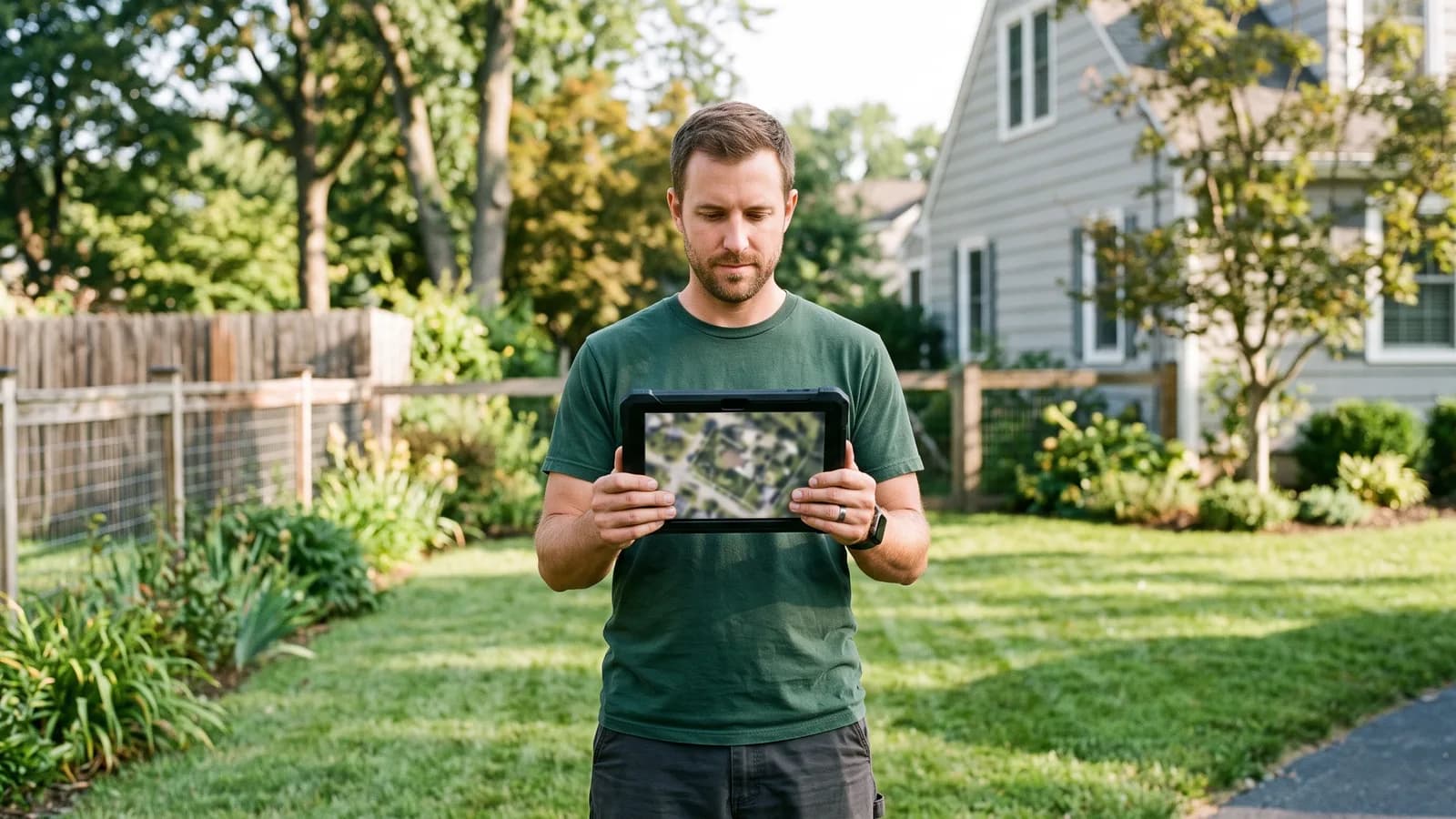
Pulling overhead imagery against a property address gives a reasonably accurate read on the perimeter that needs fencing, the approximate linear footage along each property line, and a rough count of corner and line posts. Paired with a stated height and material, that is enough to generate a real price range within minutes of a lead coming in, not a vague estimate but a number built on the actual shape of the lot. For a straightforward backyard enclosure on a flat residential lot, that range is often close enough to quote with confidence.
Linear footage versus grade, gate placement, and obstructions
What overhead imagery cannot show is what the ground actually does. A slope that requires stepped or racked panels changes both material and labor. A mature tree root system, a shed built against the property line, or a buried irrigation line can all force a different post layout than the imagery suggests. Gate placement is another blind spot, a driveway gate wide enough for a mower is a different hardware and framing decision than a walk gate between two yards, and that detail only becomes clear on a drive-by or an in-person walk. A locate request for buried utility lines is a separate step entirely and belongs in the process regardless of how the initial number was generated. Aerial measurement earns its keep by producing a fast, honest range, not by replacing the site visit that still has to happen before a contract gets signed.
Sending a real range before the competition schedules a visit
The workflow that wins is short: a lead comes in, imagery is pulled against the address within the hour, and the homeowner gets a call or text with a real range along with plain language that the number will be confirmed on site. That single step, sending an actual price instead of “let's schedule a visit to talk numbers,” is often the difference between getting the in-home appointment and getting told the homeowner already booked someone else. It also lets a sales team prioritize their in-person time toward homeowners who have already seen a number they are comfortable with, rather than spending a drive-by on every inbound call regardless of fit. A crew calendar that is already tight during a spring surge cannot afford to burn a site visit on a homeowner who was only collecting numbers to compare against a budget they had not actually settled on, and a real range sent early filters that out before it consumes anyone's afternoon.
Set the range language up front
Where speed to quote compounds with speed to lead
A fast estimate only pays off if the lead was answered fast in the first place. The trigger behind a real fence appointment is usually time-sensitive, a new pet, a closing date, a storm, which means a homeowner who submits a request is actively comparing responses in real time, not filing them away for later. And because a fence quote request is never exclusive, every hour between the form submission and the first real number is an hour a competitor can close the gap. The intake-to-estimate pipeline that makes a same-hour range possible, from lead capture through the first outbound call, is covered in more detail on how it works. Combined with a landing page built to capture the address and basic project details in the first exchange, the two speed advantages stack: a homeowner who lands on the page, gives an address, and has a real range in hand within the hour is simply not shopping the same way as one left waiting for a callback.
Ready to talk numbers on your own pipeline?
On the strategy call, we'll lay out the plan we'd run for your business and talk through how it fits your market.
Final thought
Fence buyers move fast because fences are easy to describe and easy to compare, which means the contractor who can turn an address into a real number before the competition schedules its first visit has a structural edge that has nothing to do with price or workmanship. Aerial measurement does not replace the walk-through, the locate request, or the conversation about grade and gate placement, but it replaces the days a homeowner used to wait for a starting number. Pair that speed with a fast lead response and the fence business that answers first usually keeps the job, regardless of how many other trucks were in the running.
Tagged